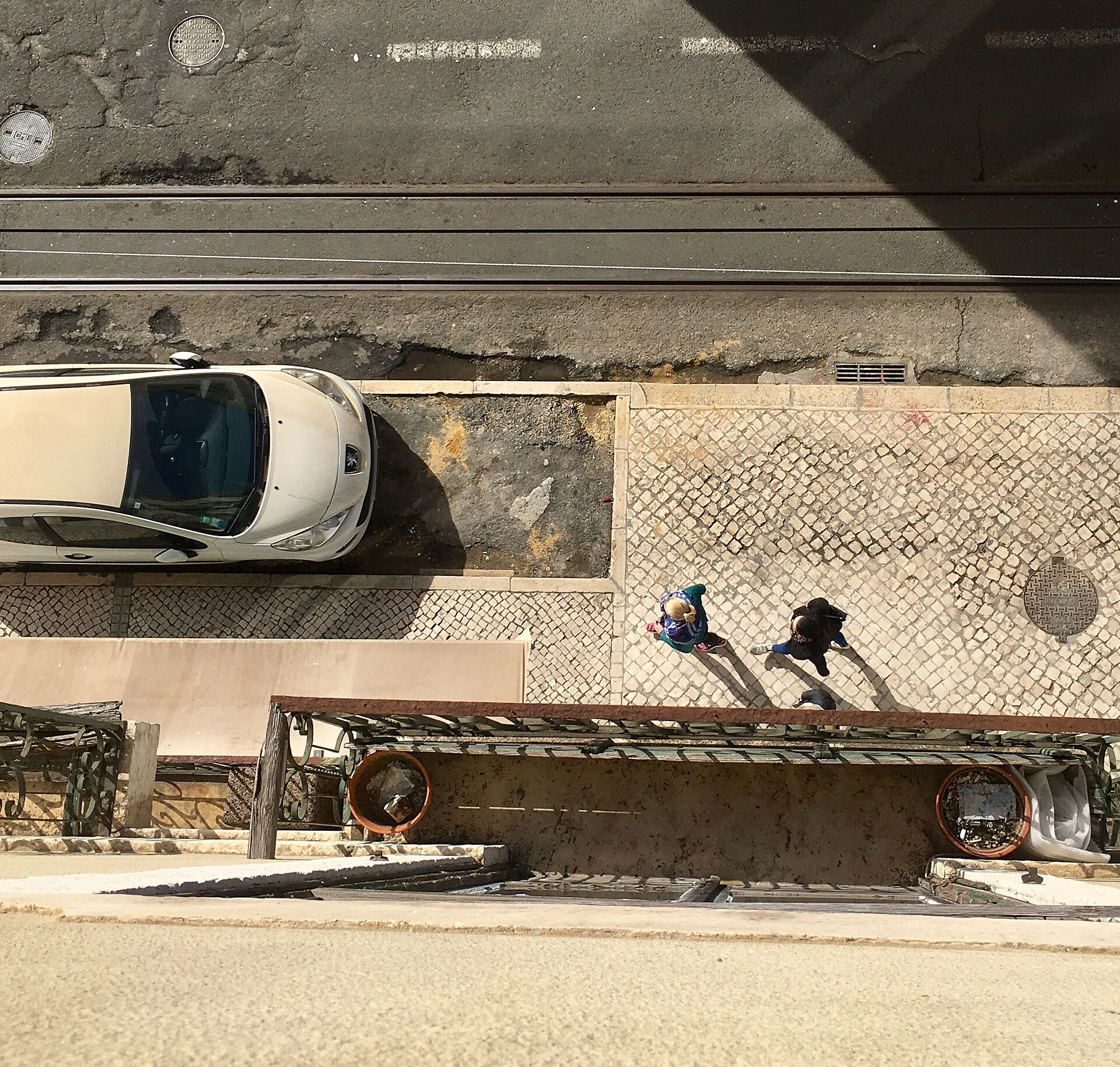
Lisbon's city council is removing 46 parking spaces from Chiado's streets starting in August, converting much of that curb space into wider sidewalks instead, part of a new program called Viva a Rua, Lisboa. Chiado is one of Lisbon's busiest commercial and tourist districts, linking the Baixa with Bairro Alto, and its narrow historic streets carry heavy foot traffic. Parking will be banned outright on Rua Garrett, Rua Nova do Almada, Calçada do Sacramento, and part of Rua Serpa Pinto. On Rua Ivens, parking will be allowed on only one side of the street instead of both.
Rua Anchieta, already largely pedestrian before this project, and Rua do Carmo are both included as fully pedestrian streets within the plan. The other five streets will continue to carry vehicle traffic. The change there is the removal of most or all curbside parking, not the streets themselves. The remaining spaces are intended primarily for residents, loading and unloading, and accessibility needs, with exceptions for emergency vehicles.
The numbers behind the decision
The city commissioned traffic studies from three firms, MigTrafego, Consulmar, and UpNorth, ahead of the change. According to studies commissioned by the city, around 20,000 pedestrians use Rua Garrett daily, compared with roughly 4,000 vehicles. Sidewalks will widen by different amounts depending on the street, by roughly 40% on Rua Garrett, 27% on Rua Nova do Almada, 32% on Rua Ivens, and 27% on Rua Serpa Pinto.
The city isn't adding bike lanes as part of this project, officials have said explicitly. Mayor Carlos Moedas has framed the change as balancing pedestrian space with efficient traffic flow rather than pushing cars out of the area entirely, and Deputy Mayor Gonçalo Reis, who holds the mobility portfolio, has described it as a "balanced solution" between walking space and traffic organization.
How it's being built
The city is beginning with a tactical urbanism approach rather than permanent construction. The expanded pedestrian areas will initially be marked with painted surfaces designed to resemble traditional calçada portuguesa, along with movable planters and street furniture, until permanent paving and curbs are installed. Construction on those permanent elements is expected to begin in the second half of August, with a planned 45-day timeline that would finish the work by September.
The city has indicated it may later extend the same approach to Rua da Escola Politécnica, the Príncipe Real neighborhood, and Rua de Belém, without committing to dates.
Is this part of a wider pattern?
Not really, at least not as a fresh 2026 policy shift. Similar pedestrianization efforts have been underway in parts of Porto's historic center for years, but they're not part of any new nationwide initiative. Nothing comparable turned up in Braga or Coimbra either. For now, Lisbon's Chiado project looks like a municipal initiative specific to Lisbon, not evidence of a broader national policy shift.