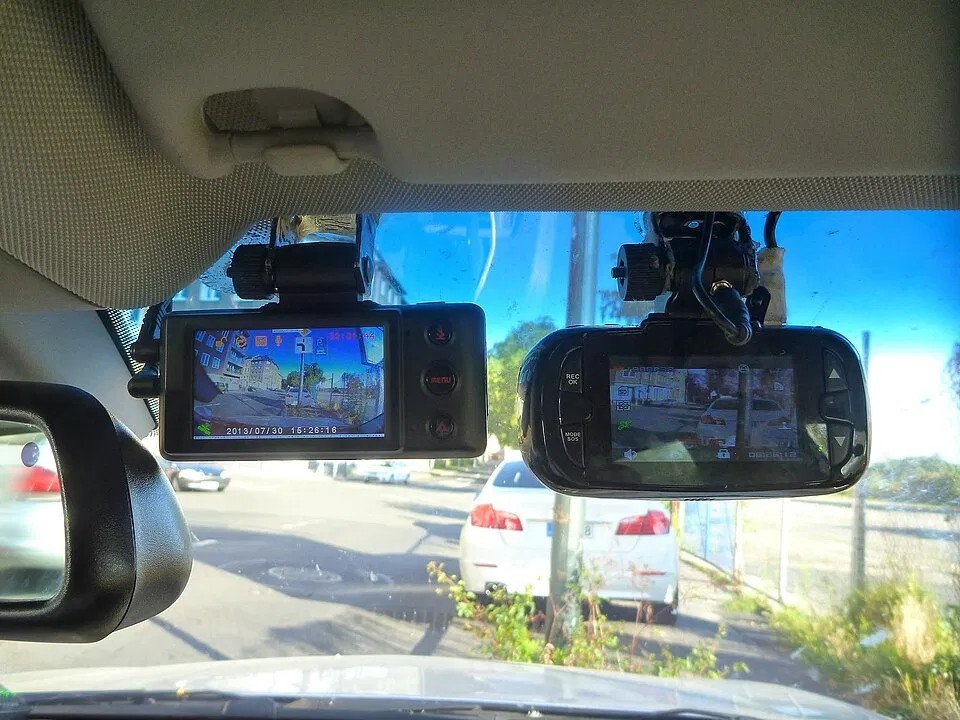
In the United States, a dashcam is an unremarkable accessory. In Portugal, the same device sits in a genuine legal gray zone, and American drivers who assume it works the same way here are often surprised to learn there's no simple answer.
Portugal's national data protection authority, the CNPD (Comissão Nacional de Proteção de Dados), has taken a clear public position on the matter. Asked directly by the fact-checking outlet Polígrafo whether dashcams filming other people on public roads are legal, CNPD replied that Portuguese law prohibits cameras from capturing public roads or third-party property, citing Article 19 of Law 58/2019, the statute that implements the EU's General Data Protection Regulation in Portugal. According to CNPD, the issue is the processing of personal data, capturing images of people or license plates, and the right to move around without a record of where, when, and with whom someone was traveling.
Why legal experts don't fully agree
CNPD's position is an administrative opinion, not a court ruling, and Polígrafo separately interviewed three lawyers who split on the question. One, privacy specialist Elsa Veloso, backs CNPD's reading entirely: filming other people without consent has no legal basis under Portuguese law, she argues, regardless of the driver's intent.
A second lawyer, Diogo Duarte, takes a narrower view. He argues dashcam use isn't illegal by itself, so long as the driver meets the GDPR's procedural requirements, including a documented assessment of "legitimate interest," proper limits on how long footage is stored, and respecting people's right to be informed their data may be captured. In his view, most real-world dashcam use ends up unlawful not because recording is inherently banned, but because drivers don't meet those procedural obligations in practice.
A third, technology lawyer Daniel Reis, draws a line between purely personal use and anything systematic or commercial. The GDPR doesn't apply to data processing carried out by an individual for purely personal or household purposes, he notes, which he argues could cover a driver recording their own commute for insurance purposes. Continuous, wide-ranging street surveillance is a different matter, in his view, and would fall under the regulation.
What courts have actually decided
Because there's no dedicated statute written specifically for dashcams, the practical outcome in any dispute tends to come down to the specific facts of the case. That absence is precisely why the issue remains contested: regulators, lawyers, and courts are all applying broader privacy law rather than a statute written with dashboard cameras in mind. One Portuguese court, the Tribunal da Relação do Porto, validated a recording made by a car owner whose vehicle was being vandalized. The ruling turned on the fact that the camera was pointed exclusively at the owner's own vehicle rather than sweeping the surrounding street or capturing passersby.
Law firm Caiado Guerreiro, writing about the issue, frames the underlying legal test as one of proportionality: courts weigh the recording's necessity, for proving an accident or a crime, for instance, against the privacy of anyone captured, deciding case by case rather than applying a blanket rule. Even footage obtained in a way that raises privacy questions can sometimes still be admitted as evidence in Portuguese courts, depending on the circumstances of the case. That framing is consistent with how Portuguese courts have handled similar disputes over private recordings used as evidence in other contexts, where the same balancing test tends to apply.
There is no dedicated Portuguese law written for dashcams specifically. Both CNPD's prohibition and the more permissive readings from individual lawyers are attempts to apply GDPR and privacy law that predate the technology's popularity.
The practical bottom line
None of this amounts to legal advice, and anyone facing a specific dispute, an accident, an insurance claim, a police stop, should consult a Portuguese lawyer. But reading across CNPD's stated position and the lawyers who disagree with parts of it, a few practices come up repeatedly as reducing risk: recording in a continuous loop rather than accumulating long-term footage, keeping the camera's field of view centered on the vehicle itself rather than the wider street, and never publishing or sharing footage that identifies other people. None of those practices guarantees a recording will be considered lawful if challenged, but it reflects where the range of expert opinion converges.
A related gadget that isn't ambiguous at all
One device that often gets bundled with dashcams in the US market has a much simpler answer in Portugal: radar detectors are flatly illegal. Article 84, paragraph 3 of the Código da Estrada, Portugal's road traffic code, bans the installation and use of any device capable of detecting or interfering with speed or traffic enforcement equipment. Fines range from €500 to €2,500, and police can seize both the device and the vehicle's documents until it's removed.
GPS-based driving apps such as Waze or Google Maps are a different category and remain legal, since they rely on crowdsourced location reports rather than detecting a radar or laser signal directly. Drivers bringing a US-bought device that combines both functions in one unit should be aware that only half of it is legal to use here.