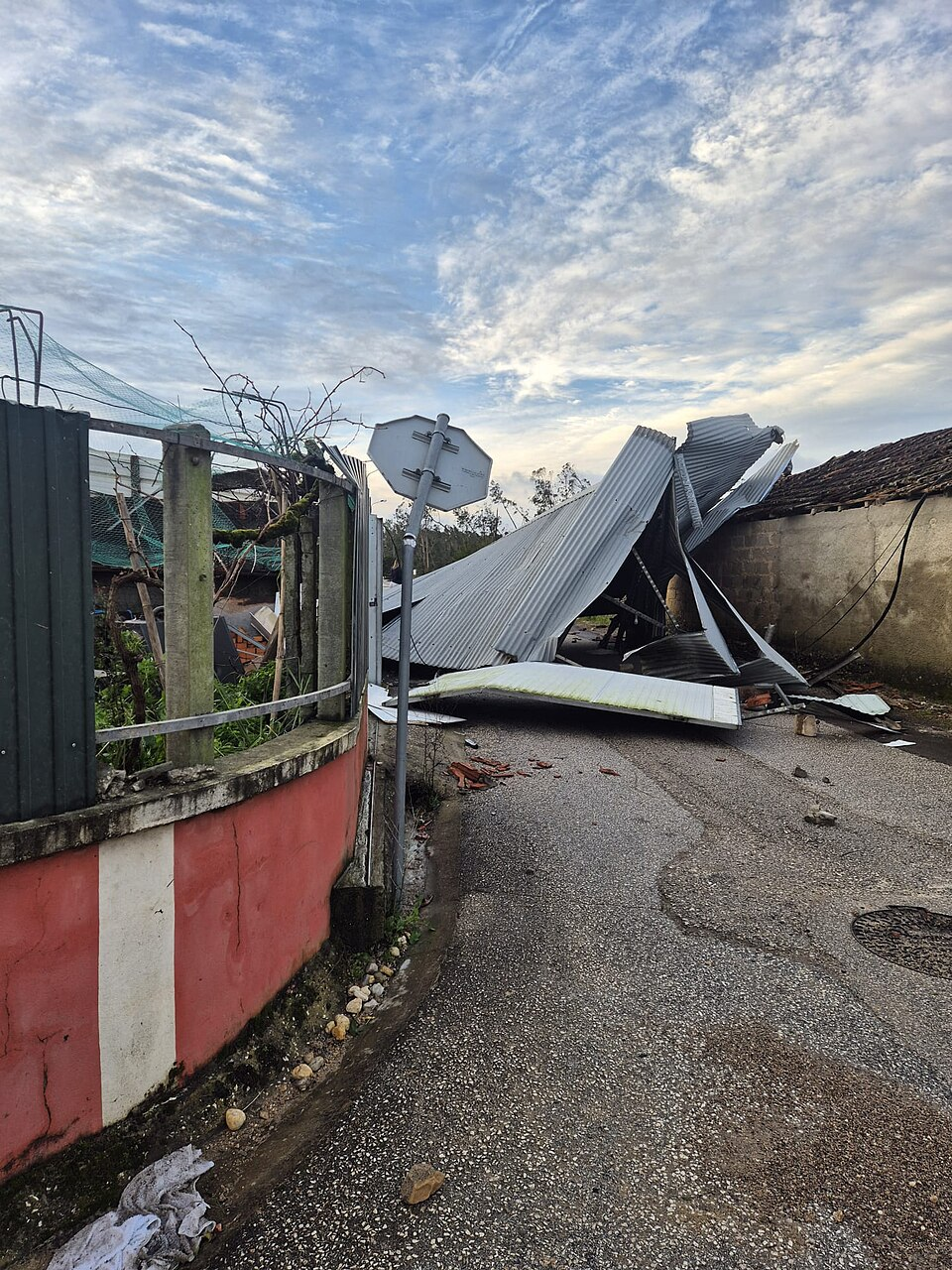
Law 42/2026, published August 7 and taking effect August 8, creates a temporary exception to Portugal's local government financial rules for municipalities still dealing with the aftermath of January's Storm Kristin. The exception applies retroactively from January 28, when the storm hit, through December 31, 2026, and names 59 municipalities specifically covered, concentrated in the Centro region, including Coimbra, Leiria, Castelo Branco, Santarém, Torres Vedras, and dozens of smaller municipalities across the affected area. Worth noting: the broader disaster designation itself grew over time as flood risk spread to additional areas, eventually covering more municipalities than this specific fiscal measure names, this law's scope is narrower than the full disaster-affected area.
The storm and its aftermath
Storm Kristin hit mainland Portugal overnight on January 27-28, 2026, described in official government documents as the result of "explosive cyclogenesis," a rapid-intensification weather system that produced high winds and exceptionally heavy rainfall. The government formally declared it a disaster area within days and later expanded that declaration to cover additional municipalities around Aveiro facing flood risk. The Council of Ministers has approved roughly €2.5 billion in support measures since the storm, including loan moratoriums for affected families and businesses (Decree-Law 31-B/2026) and administrative and financial simplification rules for reconstruction (Decree-Law 40-A/2026). This new law, six months later, is a targeted follow-up specifically addressing municipal budget and spending limits, not a first response to the storm itself.
What the exception actually allows
Portugal's 2013 local finance law, adopted during the "troika" era, set strict limits on municipal borrowing and required balanced budgets, meaning local governments generally couldn't spend more than they collected in revenue. The new law suspends that balanced-budget requirement specifically, but only for spending tied directly to the storm response. Municipalities, intermunicipal communities, and metropolitan areas also get more flexibility to waive local fees, though that waiver flexibility is limited to 2026 only.
City councils can take out short-term loans through August 31, 2026, without needing prior approval from their municipal assembly, provided the borrowing is "duly justified" and directly tied to the storm's aftermath. Assemblies still have to formally ratify those loan agreements at their next meeting after the fact.
Municipalities and intermunicipal entities can also spend money to help other municipalities, intermunicipal communities, or civil parishes (freguesias), including ones outside their own borders, as long as there's "manifest urgency," without needing separate government authorization first. Spending on public works, service contracts, and movable-property purchases or leases can be added into a revised municipal budget, though that still requires ratification by the municipal assembly at a meeting called within 30 days.