Motorcycle and moped riders have faced an unusually busy enforcement calendar in Portugal this summer. Since the start of June, authorities have run three distinct, back-to-back operations focused specifically on motorcycle and moped riders, and the justification behind all three starts with the accident numbers.
Between January 2023 and December 2025, Portugal recorded 34,179 accidents involving two-wheeled vehicles, resulting in 440 deaths, 3,041 serious injuries and 34,501 minor injuries. Authorities say the danger is concentrated somewhere specific: according to the National Enforcement Plan, nearly half of all severe two-wheeler accidents happen on ordinary urban streets and national roads, not motorways, which is where each of the three operations below has concentrated its checks.
Three operations, one enforcement push
The first was "RoadPol – 2 Rodas," a European traffic-police network operation GNR has taken part in since 2021, running 1-7 June and focused on aggressive driving. GNR reported that between January and May 2026 alone, it had already logged 1,163 citations against motorcycle riders, 216 of them specifically for missing or incorrect helmet use. For all of 2025, the equivalent totals were 1,910 citations, 550 of them helmet-related.
The second and larger action was a full national campaign, "Duas Rodas, Agarre-se à Vida" ("Two Wheels, Hold On to Life"), run jointly by the PSP, GNR and national road safety authority ANSR from 7 to 13 July, the seventh of eleven such campaigns planned for 2026. Results released on 14 July showed 550,213 vehicles and drivers were checked, with 12,429 infractions recorded, mostly for speeding, missing or incorrect helmets, illegal overtaking, expired documents or vehicle faults, drink-driving and phone use. ANSR reported that during the same week, 2,771 road accidents occurred nationally, resulting in 15 deaths, 60 serious injuries and 909 minor injuries. The majority of those casualties were riders or passengers of two-wheeled vehicles, per ANSR, though the totals also include pedestrians and other road users caught up in the same accidents.
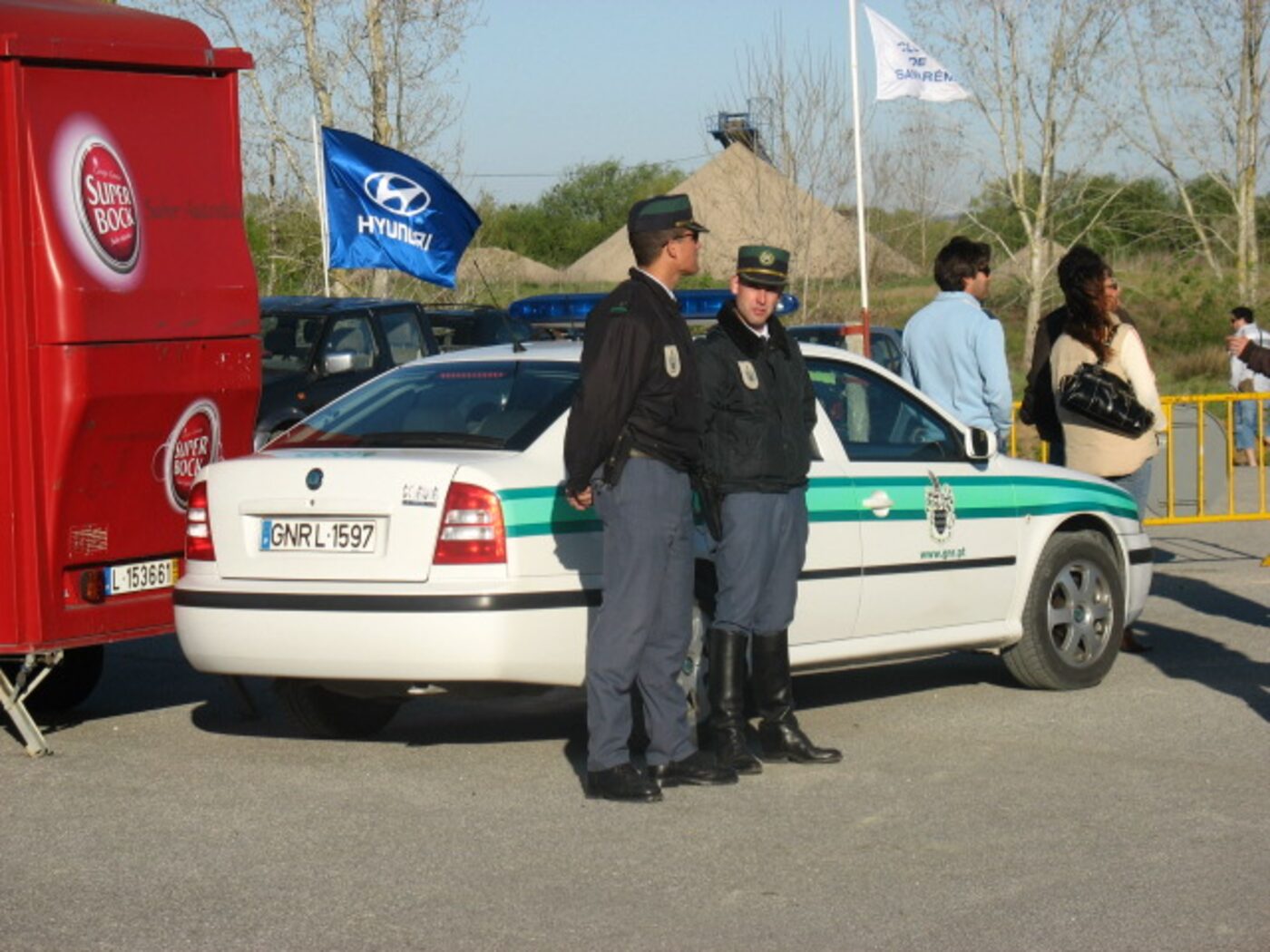
The third and most recent action is narrower and event-specific: a GNR special operation running 16-19 July, timed to the 44th International Motorcycle Rally of Faro at Vale das Almas, which draws roughly 20,000 riders and 600 motorcycle clubs from across Europe. GNR is running intensified patrols on the Algarve's main access roads for the length of the event, citing an expected sharp rise in two-wheeled traffic on those routes.
- Speeding and dangerous overtaking
- Riding without a helmet, or with it improperly fastened
- Weaving irregularly between lanes of traffic
- Sudden, unsignalled manoeuvres
- Expired documents or unsafe vehicle condition
- Driving under the influence, or using a phone while riding
Motomais, a motorcycling trade outlet, argued the campaign coincided with the busiest period of the summer riding season, including the Faro rally, and reflected an emphasis on enforcement rather than rider education. GNR and ANSR have not responded publicly to that criticism.
Why this matters if you ride
This isn't over for the year. ANSR has six more campaigns planned under the 2026 National Enforcement Plan before December, and GNR's Faro operation runs through Sunday, 19 July. For riders, the practical message is straightforward: police across all three operations have consistently highlighted helmet use, speeding, documentation, vehicle condition and impaired riding as enforcement priorities. Anyone travelling by motorcycle or scooter this summer, whether on a privately owned motorcycle or a rental, which foreign visitors do often around Lisbon and the Algarve, should expect increased roadside checks, particularly around major events such as the Faro rally.