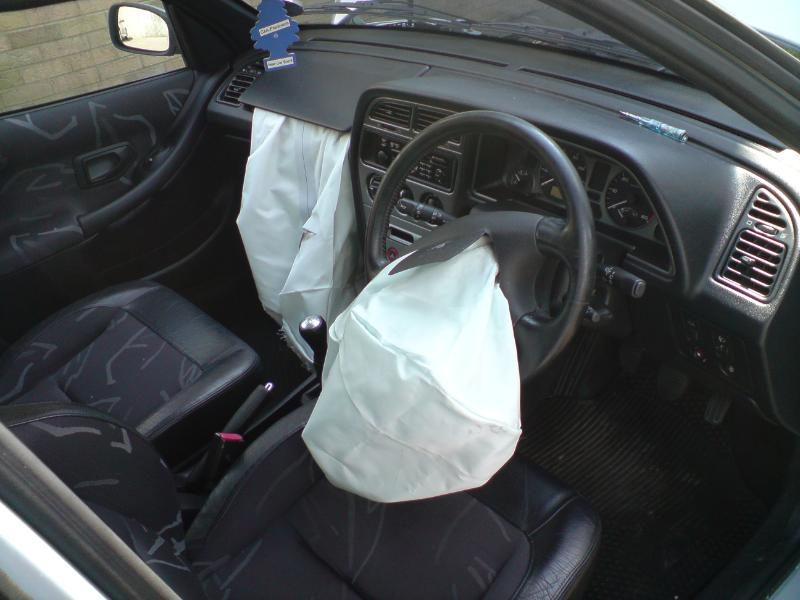
Since March 1, any vehicle presented for Portugal's mandatory periodic inspection (IPO) with an active, uncorrected manufacturer recall fails automatically, according to the Instituto da Mobilidade e dos Transportes (IMT). Before this year, a pending recall alone wasn't enough to fail a car; only defects the inspector rated as severe or very severe could do that. The new rule, which stems from Deliberação n.º 999/2024, makes an unresolved recall itself a qualifying defect, classified as either "grave" or "muito grave" depending on what the manufacturer flagged. A "muito grave" classification is the more serious of the two: the car is restricted to driving only to the repair shop and back for reinspection until the work is done.
How many cars this actually affects
The IMT estimates that roughly 87,000 vehicles are currently on Portuguese roads with at least one recall still outstanding, a figure the Associação Automóvel de Portugal (ACAP) has separately confirmed. In the first 40 days after the rule took effect, more than 3,400 vehicles failed inspection specifically because of an unresolved recall, averaging roughly 84 cars a day and accounting for close to 8% of all monthly inspection failures nationally. According to the consumer association ACP, most of the outstanding recalls involve safety-critical components: brakes, steering, electronics, and, in a large share of cases, the Takata airbag inflators that have driven recall campaigns across the industry for years.
Complaints have jumped 459% since the rule took effect
Portal da Queixa, Portugal's consumer complaints platform, recorded 123 recall-related complaints between January and June of this year, compared with 22 in the same period of 2025, an increase of 459%. That's a sharp acceleration even against an already-rising trend: all of 2025 saw 64 recall complaints, itself up 10.3% from 58 in 2024. About a third of this year's complaints (32.5%) specifically reference the IPO, and in roughly one in ten cases, the inspection was the moment the owner first learned their car had an open recall at all.
Portal da Queixa itself is careful not to overstate what the number means. The platform says the jump likely reflects greater visibility and awareness of recalls, driven by the new inspection rule and by a national lookup tool launched alongside it, rather than proof that manufacturers' recall performance has deteriorated. At the same time, it says the complaints point to real "failures in execution" that can leave drivers' safety exposed, not just a paperwork inconvenience.
What people are actually complaining about
The most common complaints are about the gap between being notified of a recall and actually getting it fixed: missing parts, scheduling difficulty, repair delays, and dealers that simply don't respond, even though recall repairs are legally required to be free of charge. One complaint logged with Portal da Queixa illustrates the pattern: a Volvo owner discovered an open recall only when the car failed its IPO, having never been contacted by letter, phone, or email beforehand. The local dealer then told the owner it didn't have the necessary part in stock and had no estimate for when it would arrive, leaving the car legally undriveable in the meantime.
The complaints suggest a structural gap as much as a customer-service one. Manufacturers are required to contact identifiable owners through effective means, letter, email, phone, or SMS, but that system depends on having the current owner's correct contact details on file. Portugal has an active used-car market, and when a vehicle changes hands, the manufacturer's records don't always update with it. A recall notice sent to a previous owner's old address does nothing for whoever is driving the car now, until that owner happens to check for themselves.
The RECALL platform, built by ACAP together with the IMT and the Direção-Geral do Consumidor, lets any driver check for open recalls using either the vehicle's license plate or its VIN (chassis number), at recall.pt. The IMT and consumer groups both recommend checking before scheduling an IPO appointment rather than finding out at the inspection center. This matters especially if you've bought a used car recently: the previous owner may have been notified of a recall that never reached you, and the platform is the fastest way to check independently rather than waiting for a letter that may never arrive.
What this means if you own a car in Portugal
If your vehicle has a pending recall, the fix itself is free: a manufacturer-authorized dealer carries out the repair at no cost, by law. For most owners, the practical problem is the delay, and the numbers above suggest that delay is common enough to be a real planning problem rather than a rare inconvenience. Before booking your next IPO, spending a minute checking recall.pt can be the difference between a routine inspection and a car that's off the road while you wait on a part with no delivery date.