In a lot of countries, the same prescription drug can cost noticeably different amounts depending on which pharmacy you walk into. In Portugal, prices for reimbursed medicines are set nationally, so pharmacy-to-pharmacy comparison for the identical product mostly isn't where the savings are. Knowing that changes where it's actually worth looking.
Why the price is usually the same everywhere
Prescription medicines and reimbursed over-the-counter drugs have a maximum retail price set nationally by Infarmed, Portugal's medicines regulator, based on prices in a small group of reference countries, currently Spain, France, Italy, and Belgium. That maximum price applies at every pharmacy in the country. Comparing the price of the identical box of the identical medicine at three different pharmacies is mostly wasted effort. It's set by regulation, not by the pharmacy down the street.
What does vary, and matters much more, is which specific product you walk out with. Medicines containing the same active ingredient, strength, and dosage form are grouped together by Infarmed into what's called a "grupo homogéneo," a reference group. The government sets a single reimbursement reference price for the whole group, and its contribution toward your cost is based on that reference price, not on whichever specific product happens to be in the box. If you choose a pricier brand when a cheaper equivalent exists in the same group, you cover the difference yourself. Since products in the same reference group have demonstrated bioequivalence, paying more usually doesn't buy any additional clinical benefit.
Your legal right, and how to actually use it
Portuguese law already leans in your favor here. Pharmacists are legally required to tell you which option in your reference group is cheapest and to dispense that one by default, unless you specifically ask for something else. Every pharmacy has to stock at least three of the five lowest-priced products in each reference group, so the cheap option is always supposed to be available.
In practice, it's still worth saying it out loud. If your doctor wrote the prescription using the international non-proprietary name of the drug rather than a brand name, which is now the standard and required in most cases, you can simply tell the pharmacist you want the cheapest available option in that group. Don't assume silence gets you there automatically, a specific ask removes any ambiguity.
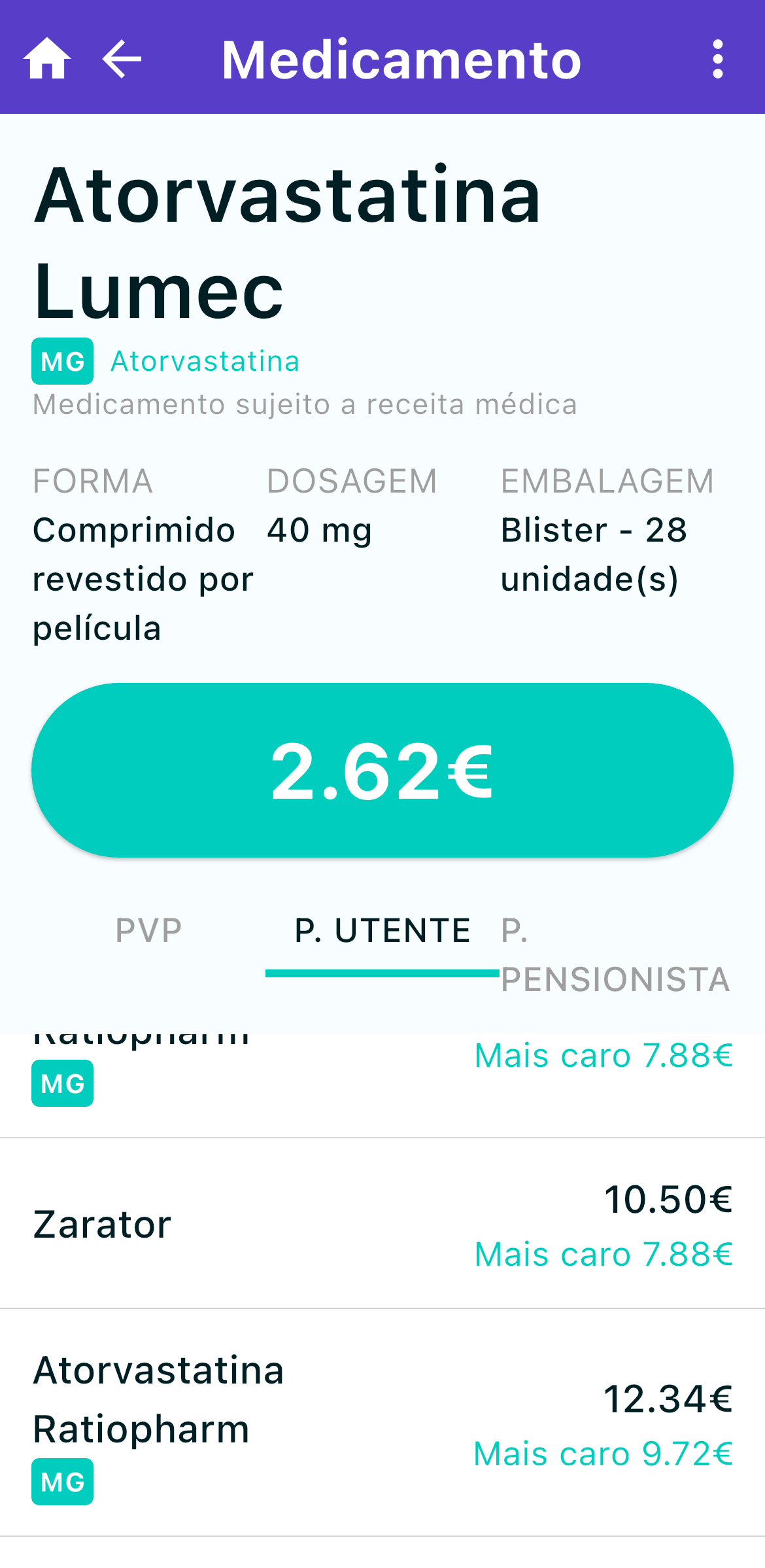
Infarmed, the regulator itself, publishes a free app for exactly this, called Poupe na Receita (also listed as eMed.pt in app stores). Scan the barcode on your prescription or a medicine box, or just search the drug by name, and it shows every equivalent option in that reference group ranked by price, along with the package leaflet and nearby pharmacy locations. It's a straightforward way to walk in already knowing what the cheapest option should be, rather than relying on being told.
Here's what that actually looks like for a common cholesterol medication, atorvastatina, 40mg. The cheapest option in the group, Atorvastatina Lumec, comes to €2.62. Zarator, a brand name, runs €10.50, almost €8 more for the same active ingredient, strength, and dose. Atorvastatina Ratiopharm is €12.34, nearly €10 more. That gap is real money for identical clinical benefit, and it's exactly what the app is built to surface before you're standing at the counter.
Screenshot: Poupe na Receita app
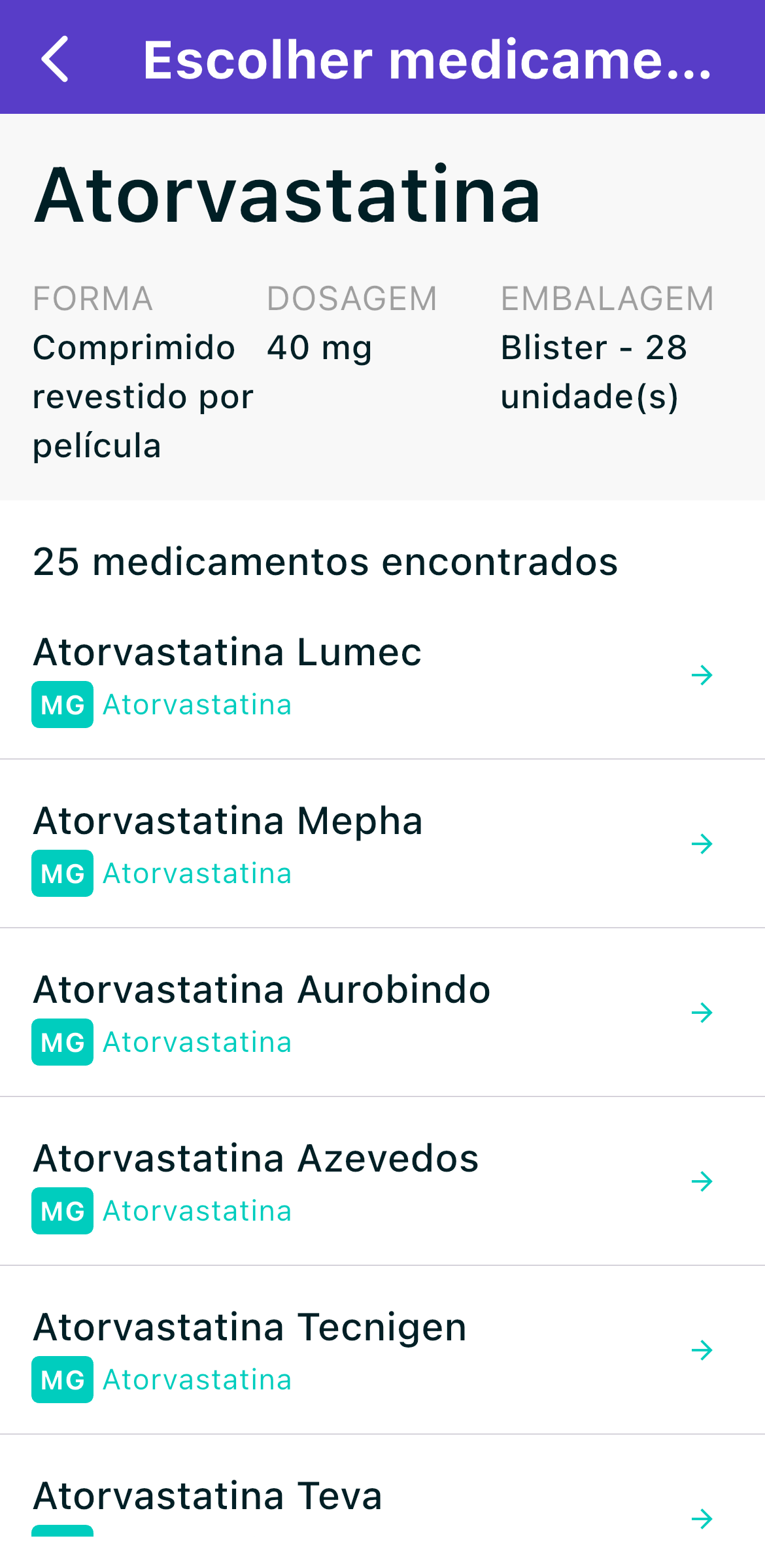
The same search shows every registered version of the drug, 25 in this case, so you can see the full range before deciding.
Screenshot: Poupe na Receita app
Where prices actually vary: everything not reimbursed
The fixed-price system applies to comparticipado medicines, the ones the state subsidizes. It does not apply to the rest of what a pharmacy sells: vitamins, supplements, cosmetics, baby products, and many over-the-counter items that aren't part of a reimbursement scheme. That's a genuine free market, and prices for identical products can differ meaningfully from one pharmacy or one retailer to the next. This is the category where comparing prices, and buying online, actually pays off.
Ordering online: what you can and can't get delivered
Several Portuguese pharmacy networks and standalone online pharmacies, including Well's, the Farmácias Portuguesas network, and Atida, sell non-prescription products online with home delivery, often with loyalty points, coupons, and free shipping above a minimum order size. This is squarely the non-comparticipado category described above, where price differences between retailers are real.
Buying prescription medicines online is more limited. Selling non-prescription medicines online is legal and common, but some smaller regional online pharmacies restrict delivery to the postal codes near their physical location, a rule tied to how their license was issued, rather than shipping nationwide. The larger chains generally do ship countrywide. If you're ordering prescription medicines specifically, check that the platform is tied to a licensed pharmacy handling e-receitas, rather than one of the many international sites that will sell prescription-only drugs without one.
When ordering online, customers may be able to select "não substituir" to tell the pharmacy not to substitute the prescribed medicine with an alternative. This can be useful when you want the exact product prescribed, or when you want to avoid a higher-priced substitute if the pharmacy would otherwise fill the order with a different equivalent product.
That preference only goes so far, though. Per Infarmed's own guidance, if your doctor added specific justification codes to the prescription, for a documented prior adverse reaction, a narrow therapeutic margin drug, or treatment continuity beyond 28 days, those override any checkout preference entirely. In the first two cases, the pharmacy has to dispense exactly what's prescribed, no substitution either way. In the third, you can only switch to something cheaper than what's prescribed, not a pricier brand, regardless of what you select at checkout. The prescription itself sets the real limits; the "não substituir" option only matters within whatever room the prescription leaves open.
A 2026 pricing exception
Portugal's Ministry of Health has exempted medicines priced up to €30 from this year's annual price review, meaning the cheapest, most essential medicines won't see the price increases other products might get in 2026. It's a small detail, but it's part of the same underlying logic: the government is actively trying to keep the cheapest tier of medicines cheap, rather than leaving it to individual pharmacies to compete on price.