Electricity: among Europe's leaders
According to APREN's own year-end analysis, published January 6, 2026, 2025 was actually a setback rather than a record. Renewable electricity's share fell for the first time since 2022, down 4.9 percentage points to 75.6% of production (37 TWh) and 68% of consumption. The cause was straightforward: after the April 2025 blackout, Portugal leaned harder on natural gas for grid stability, and gas-fired generation rose 54.2% year over year, crowding out hydro and wind. That result missed Portugal's own PNEC 2030 electricity-specific target of 86% for 2025 by a wide margin, and leaves real distance to close before the 93% target set for 2030, a separate, harder target than the economy-wide 51% figure discussed below. Non-solar renewable capacity growth also nearly flatlined, up just 1.2% from 2023 to 2024 and 0.03% from 2024 to 2025, and power-sector CO2 emissions rose 36.5% year over year as gas use increased.
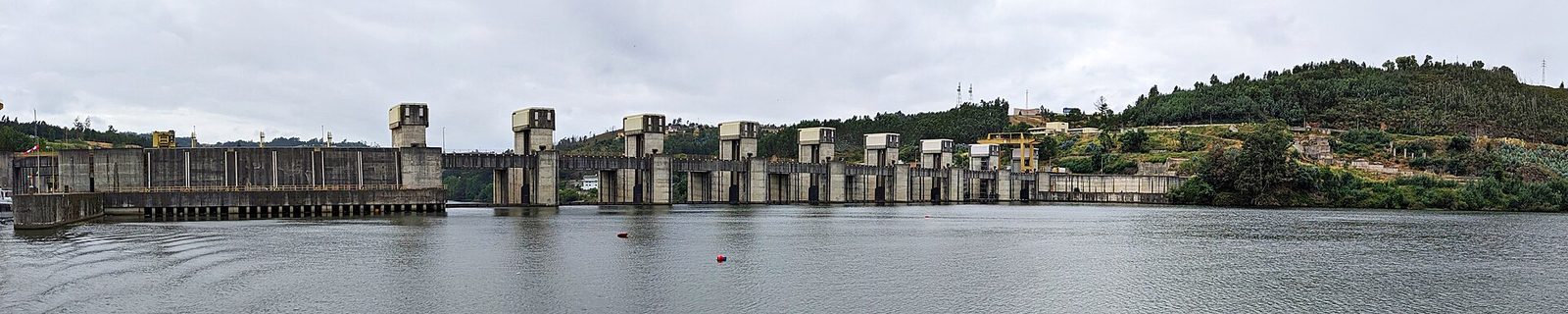
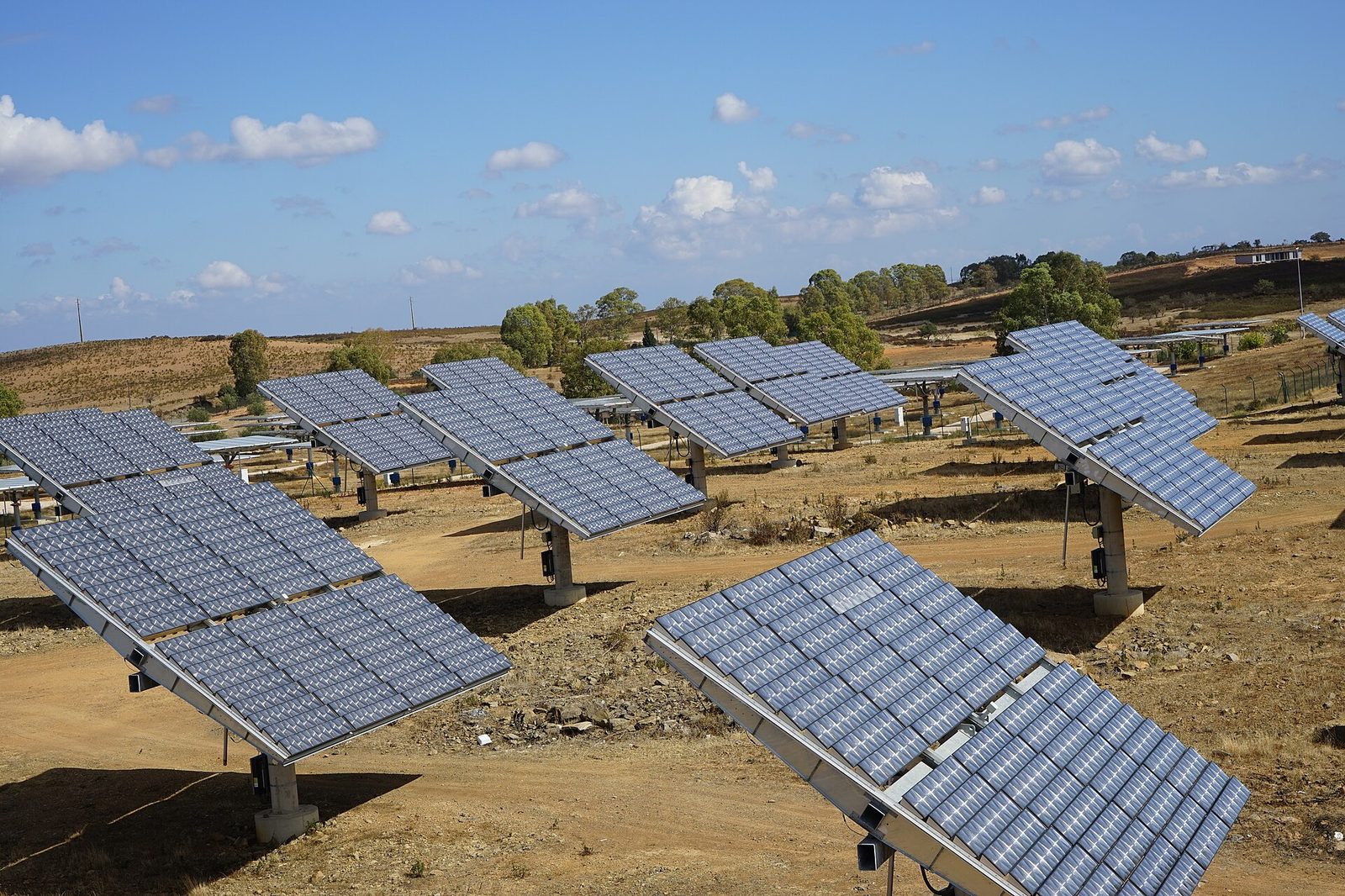
Individual months since then have looked much better. APREN reported renewables at 71.4% of mainland generation in July 2025, with wind and solar together making up nearly half the mix. Over the first nine months of 2025, renewables covered roughly 70% of demand (hydro around 28%, wind around 24%, solar around 13%), and for the first time on record, monthly solar output surpassed wind in at least one month. January 2026 was the best month in nine, at 80.7%, with hydro at 36.8% and wind at 35.2%, putting Portugal second in Europe behind Norway. February came in at 77.3% for the month and 79% cumulatively for January and February, third best in Europe behind Norway and Denmark, with hydro at 37.2%, wind at 31.3%, and solar at 5.2%.
Coal, at least, is fully gone. EDP closed the Sines plant in January 2021, nearly nine years ahead of its original 2030 schedule. The Pego plant, Portugal's last coal-fired station, shut down in November 2021, ten days early, making Portugal the fourth EU country, after Belgium, Austria, and Sweden, to fully exit coal.
The swing between a 68% year and 80%+ months isn't just hydro variability. 2025's dip was driven substantially by a post-blackout shift toward natural gas for grid stability. Hydro's rainfall-dependence is still a real vulnerability on top of that, discussed below.
Total energy: the harder number
Decarbonizing electricity has proven considerably easier than decarbonizing transport and heating. Counting all energy, transport fuel, industrial heat, building heating, is tougher. As of 2023, the latest confirmed figure, Portugal's share of renewables in gross final energy consumption was well above the EU average, up 15.7 percentage points since 2005, comfortably beating its old 2020 target of 31%. Portugal's own 2030 target for this broader measure is 51%, per the updated National Energy and Climate Plan, meaning there's real distance left to cover, mostly in transport and industrial heat.
Projects underway
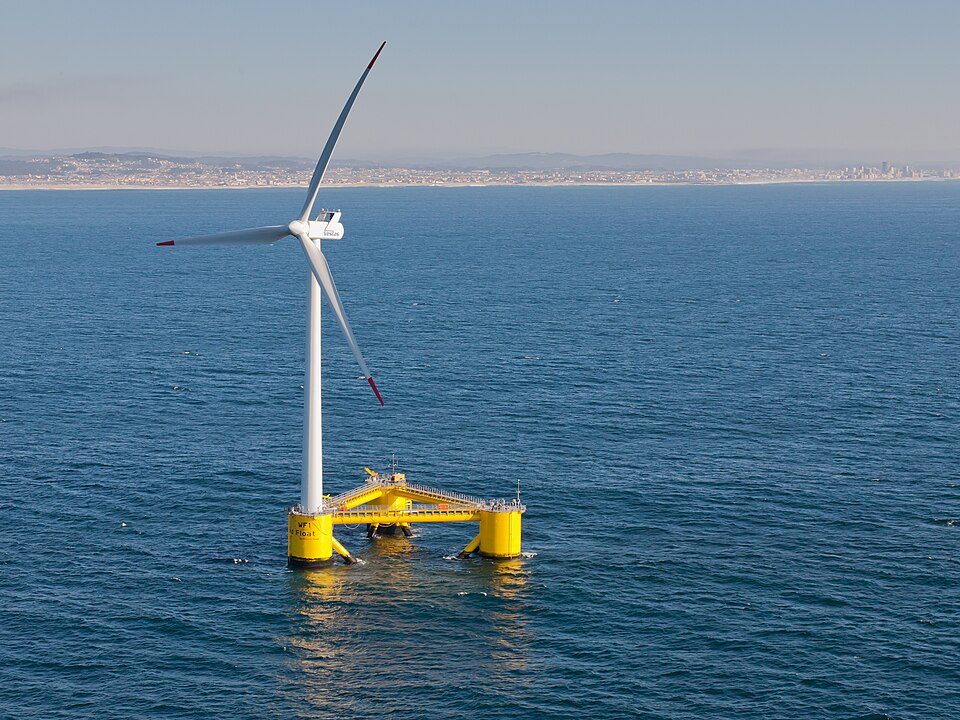
Portugal's WindFloat Atlantic, off Viana do Castelo, has run three floating turbines since 2020, one of the world's first commercial floating wind farms. Building on that, BayWa r.e, has applied to build a subsidy-free, 30-turbine floating farm in the same zone, with construction eyed from 2025 and operation by 2029, that timeline is from a 2023 project profile, so it's worth confirming it's still on track. Separately, Portugal signed rules of procedure in December 2024 for a Technological Free Zone off Viana do Castelo to formalize its Offshore Renewable Energy Allocation Plan, part of a 2GW-by-2030 offshore wind target.
The former coal-power site at Sines is being repurposed into a hydrogen hub. GreenH2Atlantic, a joint venture between EDP, Galp, Bondalti, Martifer, and Vestas, is building a 100MW electrolyzer with €92 million in EU backing; it received conditional environmental approval in June 2026, though the final investment decision is still pending. Separately, Galp's H2Sines project, a 100MW electrolyzer feeding Galp's refinery directly, finished installation in January 2026 and targets operation later this year, expected to replace about 20% of the refinery's grey hydrogen. Galp is also building a biofuels unit with Mitsui for sustainable aviation fuel and renewable diesel; the EIB's combined €430 million loan covers both this unit and the H2Sines electrolyzer. MadoquaPower2X is developing a green ammonia plant in the same industrial zone, for export via the Port of Sines. Collectively these push toward the NECP's target of 5.5GW of electrolyzer capacity by 2030.
Battery storage is the newest front, aimed directly at renewable-output variability across hydro, wind, and solar alike. EDP's BigBATT, a large standalone battery at Carregado, has EU Innovation Fund backing and is projected to save roughly 500,000 tons of CO2 over its lifetime. Galp's Alcoutim hybrid solar-plus-storage plant has been operating since April 2025, Portugal's first major co-located solar-storage project. Hyperion Renewables began construction in January 2026 on hybrid storage at existing solar plants in Estremoz and Évora. Under Portugal's Recovery and Resilience Plan, 41 storage projects have been approved with €99.75 million in grants.
What still needs to happen
Batteries are the biggest near-term gap, and Portugal knows it. As of mid-2025, total installed and near-operational storage capacity was only around 120MW, a small fraction of the NECP's own 2030 target of 1.5GW, which itself may prove modest given how fast solar and wind are being added (20.8GW solar plus 12.4GW wind targeted by 2030). In response to the April 2025 Iberian blackout, the government committed to a 750 MVA battery storage capacity auction, initially targeted to launch before January 2026, a deadline it missed. As of late May 2026, the Environment and Energy Minister was still only promising to unveil the auction's design alongside a new National Energy Storage Strategy on June 29, 2026. It's not confirmed whether that happened on schedule or what it produced, so the auction should be treated as delayed and its outcome unconfirmed rather than imminent. The related €137 million REN grid-modernization investment and the expansion of black-start capacity to four plants are separately confirmed by Portuguese legal and industry commentary. Storage remains the clearest bottleneck between a high renewable share on sunny, windy days and a genuinely resilient, weather-independent grid.
Grid and transmission investment need attention more broadly. The IEA's Portugal review warns that transmission and distribution networks already show emerging constraints, with distributed solar jumping from near-zero in 2015 to 3.1GW by early 2026, already affecting connection timelines for new generation. The IEA also recommends a formal flexibility roadmap: Portugal should quantify storage, ramping, and frequency-response needs through 2030, 2035, and 2050, tied to a planned National Energy Storage Strategy and National Flexibility Assessment.
Electrifying transport and heating is the biggest lever for the harder total-energy number, through EV adoption, building and industrial electrification, and renewable gases, all named explicitly in the NECP as the path to the 51% 2030 target. And there's a broader lesson from April 2025 itself: the Iberian blackout that briefly dropped roughly 15GW of generation across Spain and Portugal in seconds became a flashpoint in debates over renewable-heavy grids. Causes are still debated, but it's a concrete argument for the storage and grid investment described above, not a reason to slow the transition.
Portugal has solved coal and still posts some of Europe's best individual months for renewable electricity, but 2025 as a whole was a genuine step backward, not a record, as a post-blackout tilt toward natural gas pushed the country well off its own 86%-by-2025 electricity target.
The real projects underway, floating offshore wind, a Sines hydrogen cluster, and an early-stage battery pipeline, are real, but storage capacity is badly lagging both renewable generation capacity and the government's own timelines; the flagship battery auction already missed its January 2026 deadline. Closing that storage gap, not just adding more wind and solar, is arguably the single most urgent near-term task. The slower, structural fight remains transport and industrial energy use, where the country's own 51%-by-2030 target for total final energy consumption is the real test of whether the gap actually closes.