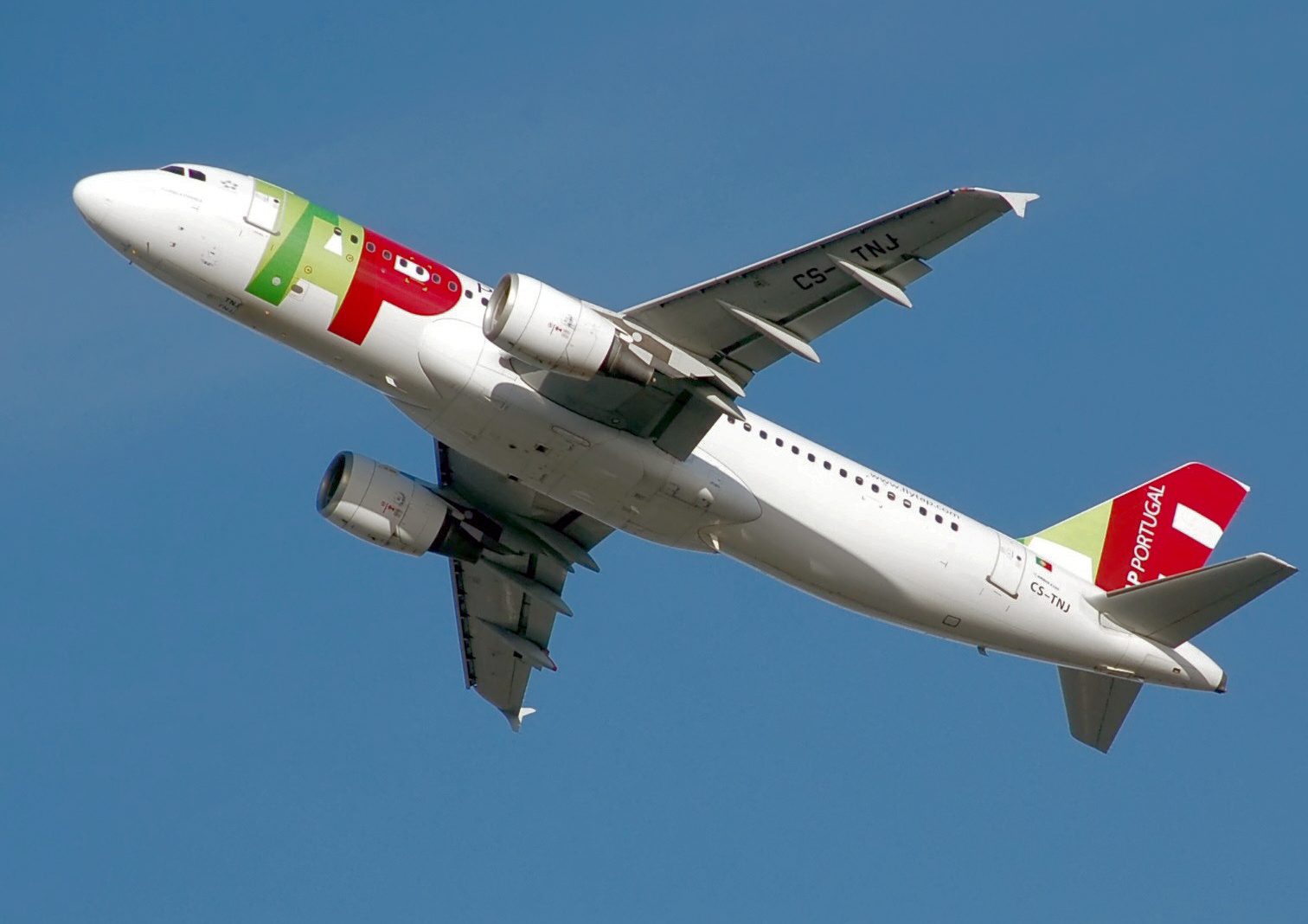
Two of Europe's largest airline groups are competing this week for a stake in TAP Air Portugal, with Air France-KLM and Lufthansa due to submit binding offers as the final step in a privatization process that has been running since the government relaunched it last year. A financial valuation carried out for the Portuguese outlet ECO, and reviewed by Portugal Dispatch, puts the airline's total worth between €1.95 billion and €2.07 billion. The financial turnaround behind that number is real. But aviation analysts say the strategic prize driving two rival bidders is older and narrower than the balance sheet: TAP's long-standing dominance on routes connecting Europe with Brazil.
Neither the purchase price nor the government's timetable for selecting a buyer has been made public. The valuation implies a price for the 49.9% stake up for sale of roughly €972 million to just over €1 billion before any competitive premium is added.
That is close to five times the implied value of TAP's last privatization, in November 2015, when David Neeleman and Humberto Pedrosa's Atlantic Gateway paid €27.5 million for 61% of the airline plus €203.4 million in shareholder loans, an implied value for the whole company of around €379 million.
The analysis, by aviation-sector financial analyst Nuno Barradas Esteves, credits TAP's turnaround to a mix of factors: a fleet that has grown from 61 aircraft to 99, a near eightfold rise in EBITDA, and debt that has fallen from eight times cash flow to 2.6 times. But when explaining what makes the airline strategically attractive to two of Europe's largest carriers rather than just financially larger, the analysis returns repeatedly to one route network above all others: Brazil.
A third major European group, IAG, owner of British Airways and Iberia, was also linked to the process but withdrew in April before submitting a non-binding offer. IAG said the decision reflected its preference to prioritize growth opportunities within its existing airline brands, after having said, before withdrawing, that it needed a clear path to majority or full ownership of any airline it acquired. The stake on offer in TAP is capped at 49.9%, with 5% of that reserved for employees, which left the airline's minority-stake structure as a central factor in IAG's decision to step back.
Europe's largest airline to Brazil
Brazil is not simply one stop on TAP's map. It is the airline's defining long-haul market and the foundation of Lisbon's role as a transatlantic connecting point.
TAP flies direct from Lisbon to more Brazilian cities than any other European carrier: São Paulo, Rio de Janeiro, Brasília, Belo Horizonte, Salvador, Recife, Fortaleza, Porto Alegre, Belém, Curitiba, Florianópolis, Manaus, Maceió, Natal, and São Luís, according to the airline's published route list. TAP itself states that it carries 27% of all passengers travelling between Brazil and Europe, more than any competitor.
Barradas Esteves singles out the North America, Brazil, and Canada routes as the airline's most profitable, telling ECO that average fares on these routes sit well above the network average and drive a disproportionate share of TAP's operating results. He also points to Lisbon's role as a connecting point: passengers arriving from other parts of Europe transfer through Lisbon onto the Brazil flights, adding traffic to routes that TAP would not otherwise fill on origin-and-destination demand from Portugal alone.
Why a rival airline can't just build this
The Brazil network is difficult to replicate quickly for reasons that have little to do with money. Landing slots at capacity-constrained airports, bilateral traffic rights between Portugal and Brazil, and decades of brand recognition and loyalty in a market with deep historical and linguistic ties to Portugal are not things a competitor can simply purchase and deploy next quarter. For Air France-KLM or Lufthansa, acquiring TAP is the fastest way into a market position that organic route launches would take years to approach, and might never fully match given TAP's head start.
This is also the part of the pitch that shows up most consistently across analyst commentary on the deal, more than any other single justification for the price being discussed. It is, in effect, the argument for why TAP is being valued as a strategic asset and not simply as a mid-sized European airline with improved finances.
The two remaining bidders describe the same opportunity in different terms. When Lufthansa confirmed its non-binding offer in April, the executive overseeing the group's strategy, Tamur Goudarzi-Pour, told Portuguese reporters that although Lufthansa already operates in Brazil, TAP would turn it into a major force there. Air France-KLM's chief executive, Benjamin Smith, framed the appeal differently, describing Lisbon as positioned to become the group's only hub in southern Europe, with reach into Brazil and Africa that he called highly complementary to Air France-KLM's existing network.
What the price doesn't fully explain
Two things complicate a simple before-and-after comparison with 2015, and are worth stating plainly rather than folding into the "TAP is worth five times more" headline.
First, much of the balance sheet improvement behind this valuation follows a roughly €3.34 billion state recapitalization after the pandemic, when TAP was renationalized and restructured. Cash on hand has grown from €113 million in 2015 to €765.3 million now, and shareholder equity from €108.3 million to €754.5 million. That reflects taxpayer-funded recapitalization rather than operating revenue generated by TAP itself, and it accounts for a meaningful share of the difference between a company that was near bankruptcy a decade ago and one now valued near €2 billion.
Second, Barradas Esteves' valuation applies a discount to reflect structural congestion at Lisbon's Humberto Delgado Airport, which limits how much TAP can grow its network in the near term regardless of who owns the airline. Portugal's replacement airport, Aeroporto Luís de Camões at Alcochete, is not expected to open before 2036 at the earliest. Whatever buyer wins this process inherits a hub that cannot meaningfully expand capacity for roughly a decade.
"These indicators suggest the company is entering this privatization process from an incomparably more favorable financial position than the one that characterized the 2015 operation," Nuno Barradas Esteves told ECO.
Portugal's infrastructure minister, Miguel Pinto Luz, has said the choice of buyer is a "strategic decision that should not be confined to price," after describing the two bidders' industrial plans as "very equivalent" when non-binding offers were submitted in April. Whether the binding offers due this week widen that gap, on price or on commitments to preserve TAP's Brazil network, may ultimately determine which bidder the government chooses.