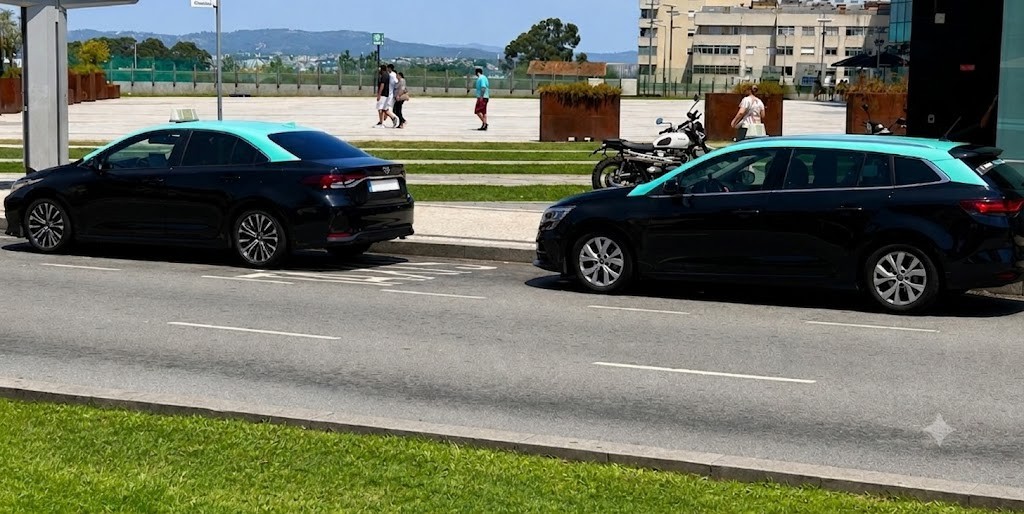
Portugal's parliament gave final approval on Friday to the biggest rewrite of the country's ride-hailing rules since the TVDE regime was created in 2018. For the first time, licensed taxis will be able to operate through platforms like Uber and Bolt. The reform, built from bills put forward by PSD and CDS-PP, passed its final global vote with support from PSD, Chega, CDS-PP and JPP, opposition from PS, IL, Livre, PCP and BE, and an abstention from PAN, following months of committee debate and dozens of hearings with regulators and industry groups. It's not law yet. The text still has to go through final drafting and be sent to President António José Seguro, who must sign it before it can take effect.
Taxis can join, with strings attached
The change generating the most pushback lets taxi operators register their vehicles for TVDE activity, provided they meet the same requirements applied to TVDE vehicles and sign up with a licensed platform manager, an app such as Uber or Bolt. It sounds like a simple expansion of where taxis can pick up fares. In practice, a taxi operating through one of these apps stops being governed by the rules that apply specifically to taxis and instead falls under TVDE rules for that trip.
That distinction has the taxi sector alarmed. The Associação Nacional Táxis Unidos de Portugal says it doesn't object to taxis using digital platforms. What it rejects is being forced to operate as TVDE within those platforms, giving up its own regulatory framework in the process. The association argues the bill creates a legal contradiction, with operators effectively having to answer to two incompatible sets of rules at once. It has also accused lawmakers of caving to multinational platforms rather than addressing what it calls predatory below-cost pricing by the big ride-hailing firms, a practice the association says the bill ignores entirely.
Nor is the taxi sector alone in objecting. Both Portugal's transport regulator, the Autoridade da Mobilidade e dos Transportes, and the mobility institute IMT argued during hearings that taxis and TVDE are genuinely distinct regimes and opposed merging them. The Secretary of State for Mobility, Cristina Pinto Dias, acknowledged the approach "raised challenges" and said it couldn't come at the expense of the public service taxis provide. The bill passed regardless.
Drivers will have to speak Portuguese
Tucked into the same reform is a requirement that TVDE drivers demonstrate functional command of Portuguese. It's a new standard, one that didn't exist under the current law, introduced in response to one of the most common rider complaints: difficulty communicating with drivers during trips. It comes bundled with tougher training, too. Minimum initial driver instruction rises to 50 hours of combined theory and practice, capped off with a 30-question exam that requires at least 27 correct answers to pass.
TVDE's official name changes, dropping the old reference to "descaracterizados" (unmarked) vehicles in favour of "vehicles made available electronically." Maximum vehicle age rises from seven to 10 years (12 for electric vehicles). The current removable vehicle ID stickers are being replaced with non-removable, anti-fraud seals issued by the IMT and tied to each vehicle's registration. Optional in-car camera surveillance becomes legal, video-only with no audio, requiring consent from both driver and passenger, footage restricted to authorities and kept for a maximum of 30 days. Advertising is now allowed on TVDE vehicles, in line with existing taxi rules. The bill also bans arrangements where a vehicle's owner loans it out or hands over the right to use it to someone else for TVDE purposes, with only limited exceptions, closing a workaround some operators used to get around driver-vehicle registration rules. A new IMT-run data-sharing platform will let the IMT, the AMT, the tax authority, Social Security and police cross-check operator, driver, vehicle and insurance records to target undeclared work. Corporate fines for violations rise sharply, from a €15,000 cap to as much as €44,000. And the price cap on dynamic, surge-style fares disappears entirely, though the platforms' 25% intermediation fee cap stays in place, now calculated on the fare before VAT.
What happens next
Nothing changes immediately. The approved text now goes to final drafting before being sent to the President for signature. Only after that does it become law, and no implementation date has been set for provisions like the language requirement or the taxi-TVDE crossover. Whether the taxi sector's objections lead to further amendments during final drafting, or whether ANTUP pursues a legal challenge over what it calls a regulatory contradiction, is likely to be the next chapter in this story.
For anyone who relies on Uber, Bolt or taxis in Portugal, the practical takeaway is simple: nothing changes yet. But the shape of the industry, who can drive for whom, under which rules, and in what language, is about to look different than it has since 2018.