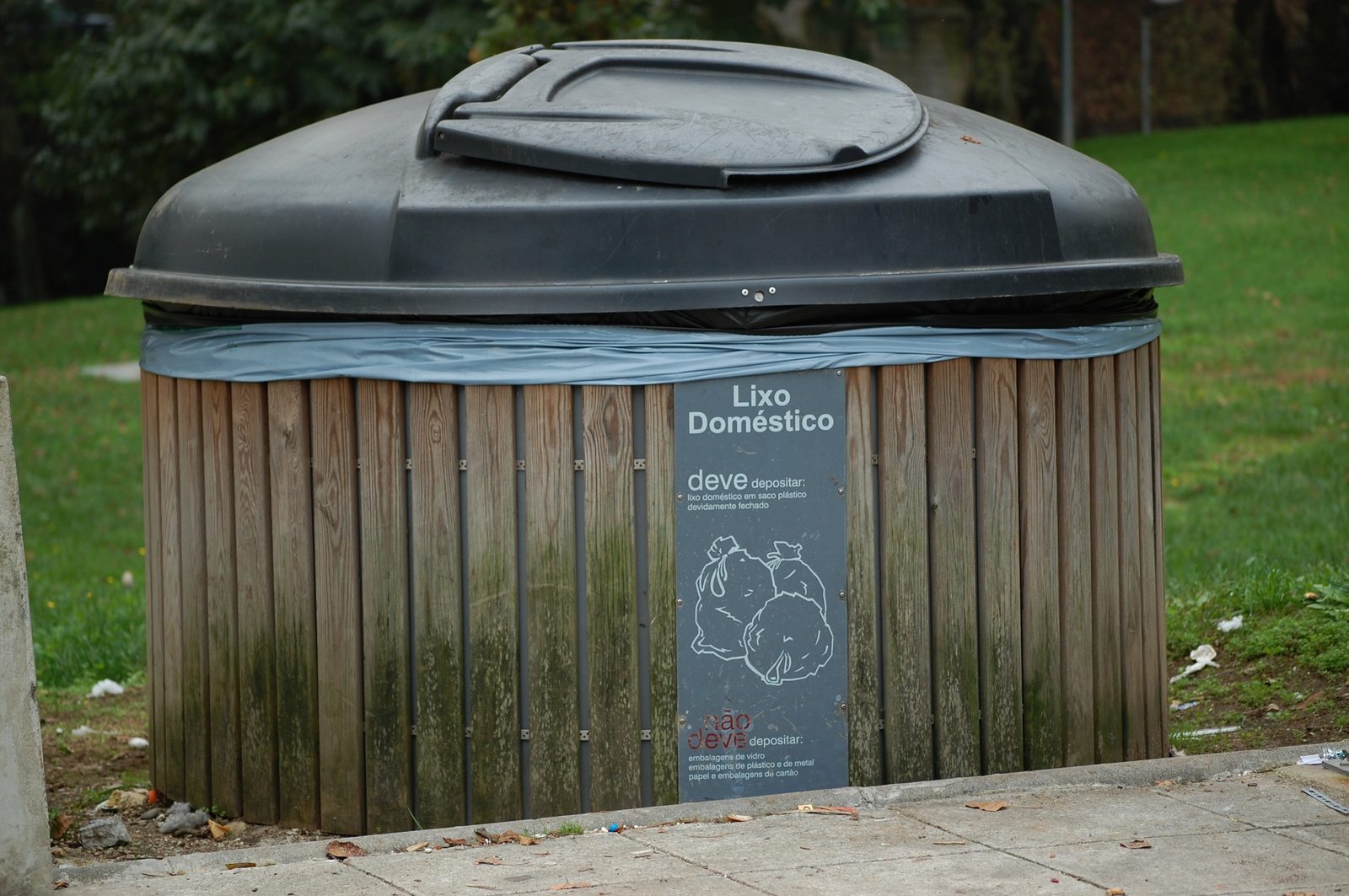
Portugal's Ministry of Environment and Energy has weighed in on the wave of urban litter linked to the Volta bottle-and-can deposit scheme, and its answer is to adapt the system, not scrap it or punish anyone. Responding to questions from ECO/Capital Verde, the ministry said it hasn't received formal complaints from municipalities about the disorder, but is aware of incidents, "especially in urban centers with pockets of poverty." Its position, in its own words: "international experience shows that informal collection and the opening of public containers isn't unique to Portugal, nor does it represent a specific failure of the system." Rather than "exclusively sanctioning measures," the ministry wants "adaptation of urban infrastructure, citizen awareness, and operational management." Municipalities remain legally responsible for waste collection itself, while Volta is operated nationally by SDR Portugal, a private, non-profit association, under separate environmental legislation, and the ministry says fixing this requires the two to work jointly.
Three countries, three different fixes
The ministry pointed to three international examples it considers useful models. Germany adapted public space itself, installing external racks (Pfandringe) on bins that let people leave bottles visibly on the outside rather than digging through the trash. The ministry called this approach "interesting" precisely because it doesn't try to eliminate informal collection, just reduce its negative side effects. Malta reinforced street cleaning, video surveillance, and enforcement against vandalism. It separately saw a rise in people donating packaging directly to charities instead. The Netherlands built the most complete response: container adaptations plus dedicated return stores plus school information campaigns. That combination cut the share of deposit-bearing packaging found in public bins by 25%.
The mayor wants it gone
That government position lands months into a program that's already drawn a direct political attack. Lisbon's mayor, Carlos Moedas, told the Now channel last week that the Volta system "will have to end" because "it isn't working," citing Dublin's experience, where he said cleanup costs tied to similar behavior have run to €500,000. Moedas also called the scheme a "hooded tax," estimating it nets the state roughly €47 million. SDR Portugal disputes that framing directly: it says it uses no public money at all. The roughly €150 million investment behind the system was funded by producers, packagers, and distributors. Unclaimed deposits, which SDR Portugal says are neither profit for itself nor revenue for the state, are reinvested in the system or, if collection targets are missed, split evenly between Portugal's Environmental Fund and its Consumer Rights Fund.
Despite the political dispute, participation has grown rapidly. Since the scheme launched on April 10, Portuguese consumers have returned 100 million packages through Volta's network of 2,500+ automated collection points, plus a phased rollout of 50 manual kiosks across 38 municipalities. SDR Portugal argues the litter problem is a predictable, temporary cost of a system just getting off the ground, not evidence it's failing, and points to Ireland, where a similar scheme launched in February 2024 now collects more than 90% of packaging and cut urban litter by half, according to an industry-funded study cited by SDR Portugal. Portugal is legally required to hit a 90% selective collection rate by 2029; roughly 54% of the country's municipal waste still ends up in landfill, some of it in sites already near capacity, which is the pressure the whole system exists to relieve. Asked directly by ECO how many complaints it has received from municipalities, or whether there's any way to control mass bottle-and-can returns, SDR Portugal did not respond.